


Start with the name on the route you use
DeepSeek’s current pricing table maps deepseek-flash to DeepSeek-V4.1-Flash-1017 and deepseek-v4-pro to DeepSeek-V4-Pro-0813. This mapping was checked on November 5, 2026. Record both the API name and the dated version when reproducibility matters.
Sources: DeepSeek: Models & Pricing
Read R1 and V3 material as versioned history
The official changelog records several generations, including R1, V3, V3.2, V4, and V4.1 Flash. A tutorial using a historical name may describe a different release or an alias that has since changed. Keep its publication date attached to any extracted claim.
When comparing R1 and V3 material, first identify the exact releases in the source. Then ask whether your intended deployment can still call or load those releases. A historical comparison cannot answer which model currently sits behind a rolling endpoint. The DeepSeek 1017 model guide provides a version-specific overview rather than a family-wide capability claim.
Sources: DeepSeek: Change Log
Separate application access from model access
A model is the inference component. An app decides how inputs are collected, what tools can run, and how results are displayed. A hosted API adds an integration route, while a downloadable release adds deployment and maintenance work.
Use four columns when comparing options: exact model, route, available tools, and accountable operator. A screenshot feature in one app should not be attributed to every deployment of the same model family.
Use a task packet to narrow the choice
Fictional task: review a short customer-support procedure and identify contradictions. Supply the same procedure and acceptance criteria to each option. Require references to the relevant sentences and an explicit unknown when the procedure does not answer a question.
Assess whether the result preserves facts and helps the reviewer act. If one route adds search or private knowledge retrieval, label that difference. It may be a useful product advantage, but it prevents attributing the outcome solely to the underlying model. For a custom integration, follow the DeepSeek API guide before adding a longer task or tools.
Check vision and deployment separately
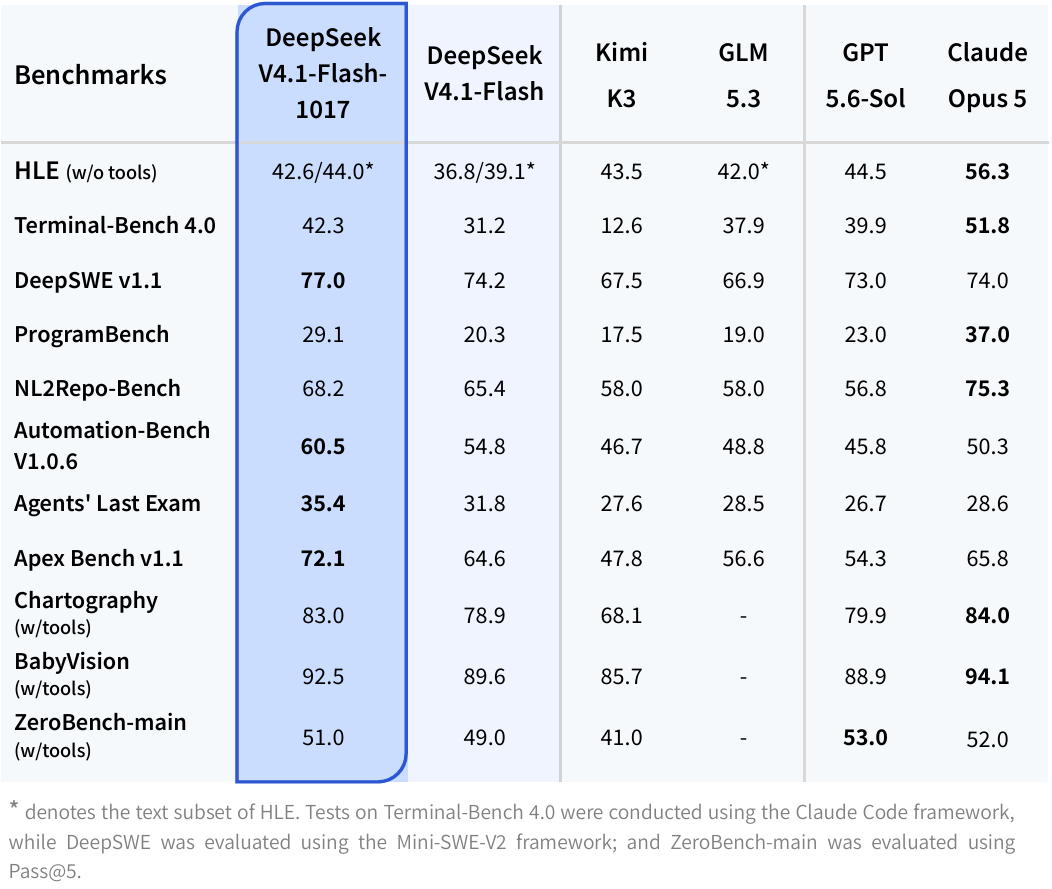
DeepSeek’s 1017 announcement identifies a dated Flash update, while its API model table is the reference for current hosted features. Use the documentation for the actual release instead of assuming that every DeepSeek generation has identical inputs or limits.
For downloadable weights, follow the official release link, read that artifact’s license and model card, and evaluate the intended hardware and inference stack. Open availability does not eliminate operating cost or establish that a laptop can run the release usefully.
Sources: DeepSeek-V4.1-Flash-1017 release, DeepSeek: Models & Pricing
Record a decision that can be revisited
Keep your task packet, chosen version, access route, enabled tools, observed result, and unresolved limitations. Recheck the packet if the route or model mapping changes.
For Orlino, the model picker and plan terms need independent verification. This family guide does not confirm every DeepSeek version is available there, and it should complement rather than duplicate a version-specific model page. The DeepSeek API pricing guide explains the billing categories to record when budgeting that route.
Frequently asked questions
Is deepseek-flash a permanent release identifier?
No. It is an API name with a dated mapping. Check the current table when reproducing a result.
Does an open-weight release mean hosted API use is free?
No. Deployment terms and provider-hosted billing are separate questions.
Sources
Provider information is separate from Orlino account access and plan terms.